


If you are experiencing refractive vision problems such as nearsightedness or astigmatism and are looking for an alternative to LASIK, Femto LASIK, or PRK, SMILE Pro may be an excellent option. This advanced vision correction procedure uses a minimally invasive technique without creating a corneal flap, resulting in reduced dry eye symptoms, less glare, and a shorter recovery period. SMILE Pro can help restore bright and clear vision once again.
What is SMILE Pro?
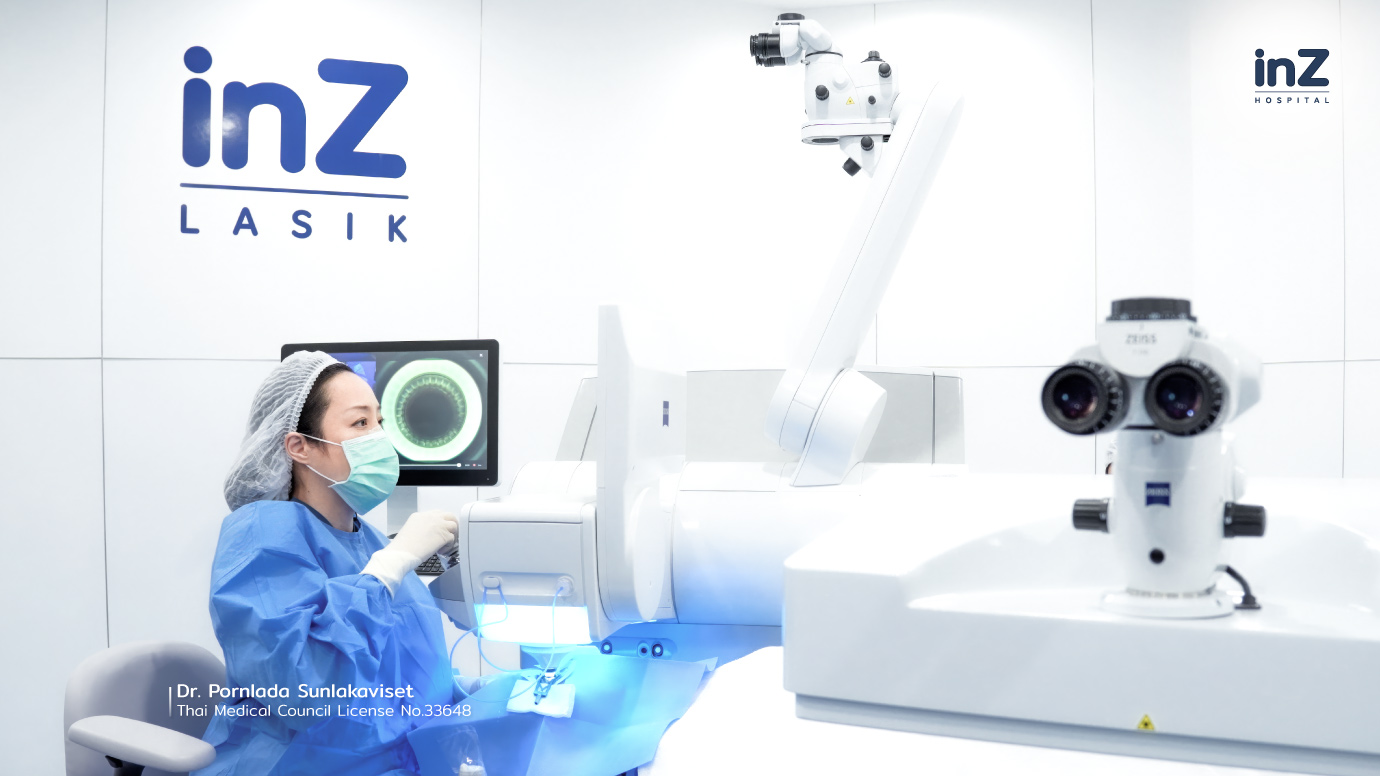
SMILE Pro is an alternative laser vision correction procedure designed to treat nearsightedness and astigmatism. It uses Femtosecond Laser technology to separate corneal layers without creating a corneal flap. The laser cuts and removes excess corneal tissue in the form of a lenticule through a tiny incision measuring approximately 2–4 millimeters. Because SMILE Pro minimizes disruption to the cornea, patients generally experience less irritation and discomfort after surgery.
Correcting Nearsightedness and Astigmatism with SMILE Pro
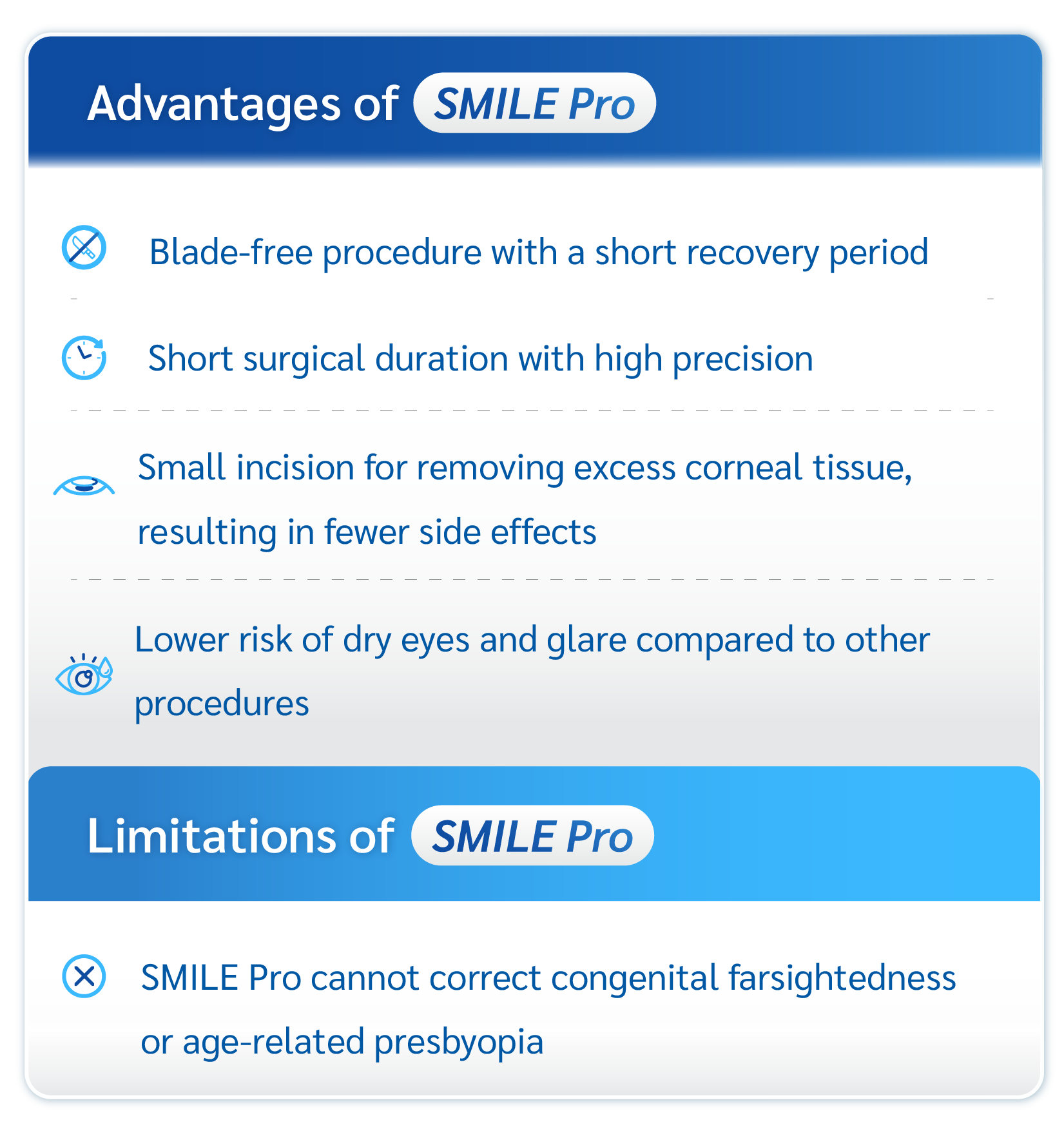
SMILE Pro is considered a gentle and eye-preserving vision correction method with relatively few side effects. However, one limitation is that it cannot correct farsightedness (hyperopia) or age-related presbyopia. It is intended specifically for nearsightedness and astigmatism.
SMILE Pro for Nearsightedness
SMILE Pro helps improve blurred distance vision by reshaping the curvature of the cornea. Candidates generally should have:
- Myopia not exceeding -9.00 diopters
- Astigmatism not exceeding -4.00 diopters
SMILE Pro for Astigmatism
Astigmatism occurs when the cornea has an irregular or asymmetrical shape, causing blurred or distorted vision. SMILE Pro offers an effective treatment option for individuals with astigmatism.
Advantages and Limitations of SMILE Pro
In addition to being a minimally invasive vision correction procedure that preserves the cornea by eliminating the need for a corneal flap, SMILE Pro also offers several other advantages. Let’s explore both the benefits and limitations of this innovative vision correction technique.
Who is Suitable for SMILE Pro?
Not everyone is a suitable candidate for SMILE Pro. An ophthalmologist must evaluate each patient’s eye condition and overall health.
Suitable candidates include :
- Individuals aged 18 years or older with stable vision for at least one year
- Myopia not exceeding -9.00 diopters
- Astigmatism not exceeding -4.00 diopters
- Individuals without eye diseases such as glaucoma, cataracts, chronic dry eyes, or conditions that impair wound healing
- Individuals who are not pregnant or breastfeeding
- People with dry eye concerns or those seeking a shorter recovery period
- Athletes or people participating in extreme sports who prefer a flapless procedure
Individuals who should avoid SMILE Pro include :
- Those with previous eye surgery
- Severe myopia greater than -10.00 diopters
- Severe astigmatism greater than -5.00 diopters
- Individuals with thin corneas
- Individuals with keratoconus or corneal ectasia
Pre-Treatment Eye Assessment for SMILE Pro

Before undergoing SMILE Pro, patients must receive a detailed eye examination and vision assessment. Since each patient’s eye condition and physical factors differ, ophthalmologists must determine the most appropriate treatment option.
The evaluation process includes:
- Computerized vision testing
- Corneal shape and thickness measurement
- Intraocular pressure measurement to screen for glaucoma risk
- Dilated retinal examination to detect retinal abnormalities
If no abnormalities are found, the ophthalmologist will recommend the most suitable vision correction method.
Preparation Before SMILE Pro Surgery
To ensure safety and smooth surgical outcomes, patients should follow these preparation guidelines:
- Stop wearing soft contact lenses for at least 3–7 days before surgery
- Stop wearing rigid gas permeable lenses for at least 2 weeks before surgery
- Get sufficient rest and avoid excessive eye strain
- Use artificial tears regularly if experiencing dry eyes
- Discontinue acne medications such as Accutane or Roaccutane for at least 1 month before examination and surgery
- Avoid eye makeup, perfume, and scented products on the day of surgery
- Wash your hair before surgery
- Avoid alcohol consumption before the procedure
SMILE Pro Procedure Steps
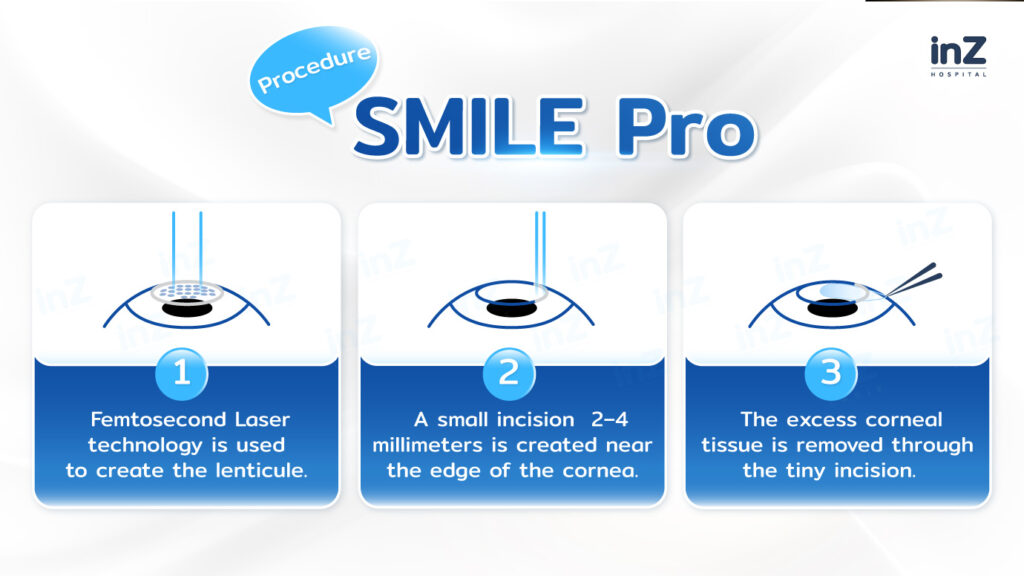
The SMILE Pro procedure begins with anesthetic eye drops to ensure comfort during surgery. After the anesthesia takes effect, the following steps are performed:
- Femtosecond Laser technology is used to separate corneal layers and create the lenticule.
- A small incision measuring approximately 2–4 millimeters is created near the edge of the cornea.
- The excess corneal tissue is removed through the tiny incision.
Post-Operative Care After SMILE Pro

After SMILE Pro surgery, patients should wear protective eye shields while sleeping for at least 7 days to prevent rubbing the eyes
Additional care instructions include:
- Use prescribed eye medications as directed
- Apply artificial tears as prescribed
- Avoid water exposure to the eyes for one week
- Avoid activities that may expose the eyes to dust or foreign particles
- Attend all follow-up appointments with the ophthalmologist
Possible Side Effects After SMILE Pro
Although SMILE Pro minimizes corneal disruption and generally has fewer side effects, some temporary symptoms may still occur, including: Dry eyes / Glare or halos around lights / Eye irritation / Light sensitivity. These symptoms usually improve over time or can be relieved with artificial tears.
Patient Impressions After SMILE Pro


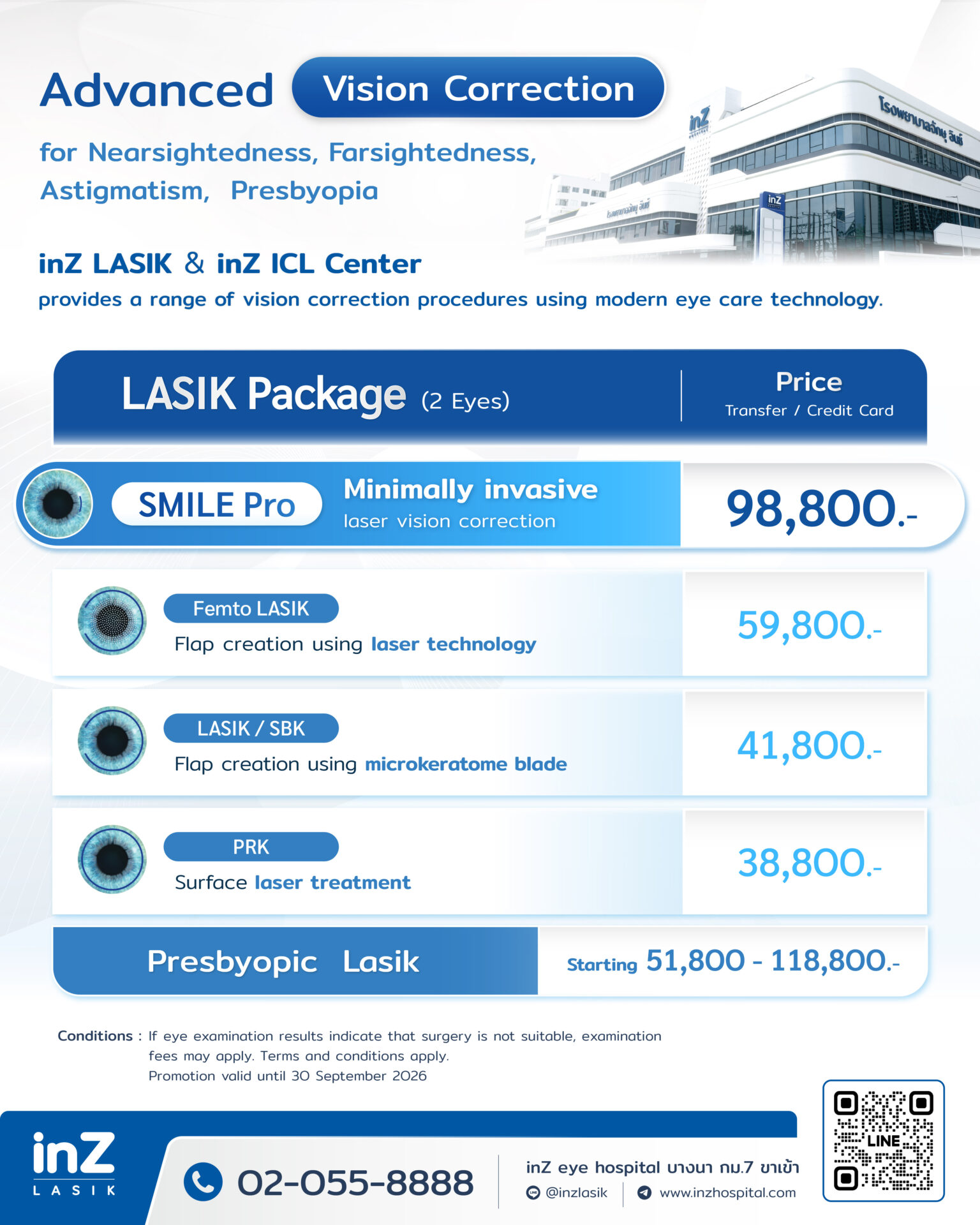
LASIK Promotions 2026
Frequently Asked Questions About SMILE Pro
Is SMILE Pro permanent?
SMILE Pro provides long-lasting correction for nearsightedness and astigmatism. However, vision may still change over time due to aging or eye strain habits.
How long is the recovery period?
Recovery generally takes approximately 2–3 days. Patients should avoid rubbing the eyes and prevent water from entering the eyes during the first week after surgery.
Is SMILE Pro painful?
The procedure is generally painless because anesthetic eye drops are administered before surgery.
Why is vision blurry immediately after SMILE Pro?
Mild blurry vision after surgery is normal. Vision typically improves within 24 hours and continues stabilizing over the following week to one month depending on the patient’s prescription.
SMILE Pro: An Innovative Vision Correction Alternative
SMILE Pro is an advanced vision correction procedure for treating nearsightedness and astigmatism with minimal corneal disruption. Using Femtosecond Laser technology, excess corneal tissue is removed through a tiny 2–4 millimeter incision.
Compared to traditional LASIK, SMILE Pro offers: Fewer side effects, Shorter surgery and recovery time, Greater corneal stability, Reduced dry eye symptoms, Faster return to daily activities. However, SMILE Pro cannot correct congenital farsightedness or age-related presbyopia.
If you are considering laser vision correction, choosing a specialized eye hospital with experienced ophthalmologists and advanced technology is essential for achieving the best possible results.
Reference
SMILE vs. LASIK: Comparing Laser Eye Surgery Options. (2023, Sep 23). NVISION. https://www.nvisioncenters.com/laser-surgery/smile-vs-lasik/