


Are you tired of relying on glasses or contact lenses every day? Constantly relying on them, forgetting them when you need them most, the ongoing cost of replacement lenses, the risk of contact lens–related eye infections, and the inconvenience of activities such as swimming or sports can all make daily life less convenient for people with myopia or astigmatism. For many individuals, LASIK offers an effective option for correcting refractive errors and reducing dependence on corrective eyewear.

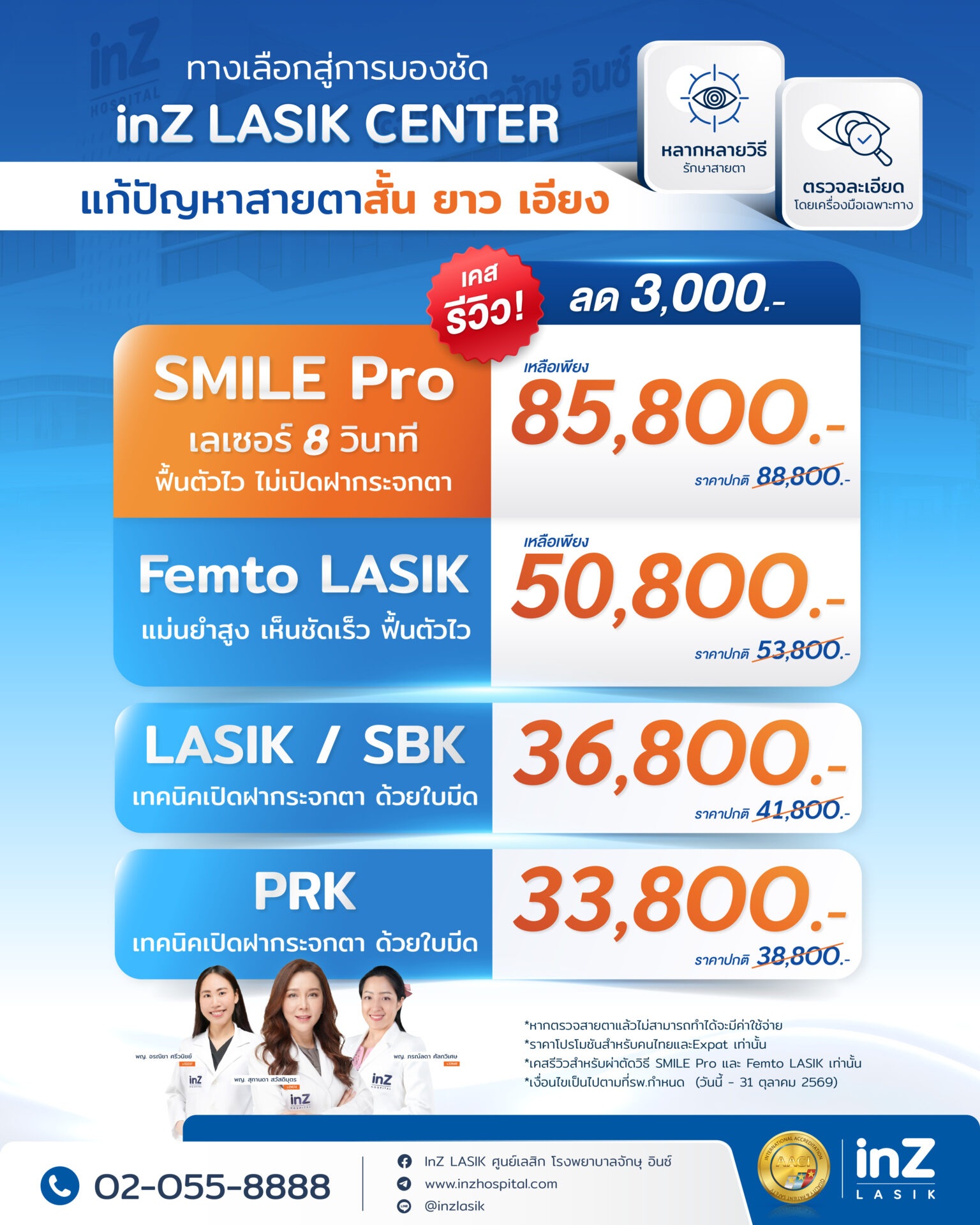
Today, several laser vision correction techniques are available, including PRK, SBK LASIK, Femto LASIK, and SMILE Pro. Each procedure has unique characteristics, advantages, and limitations. Understanding the advantages and limitations of each procedure can help you make an informed decision together with your ophthalmologist.
What Is LASIK?
LASIK (Laser-Assisted In Situ Keratomileusis) is one of the most widely performed laser vision correction procedures. During the procedure, an ophthalmologist reshapes the cornea using a laser, allowing light to focus more precisely on the retina and improving vision without the need for glasses or contact lenses.
LASIK is a minimally invasive outpatient procedure that typically takes only a few minutes per eye, allowing most patients to return home the same day. Many patients notice significant visual improvement as early as the following day.
What Vision Problems Can Laser Vision Correction Treat?
Laser vision correction can effectively treat several common refractive errors. The most appropriate procedure depends on your eye health, refractive error, corneal characteristics, and visual needs.
- Myopia (Nearsightedness) People with myopia can see nearby objects clearly, while distant objects appear blurry. This occurs when the eye is too long or the cornea is too steep, causing light to focus in front of the retina.
- Astigmatism Astigmatism causes blurred or distorted vision at both near and far distances due to an irregularly shaped cornea or, less commonly, the natural lens.
- Hyperopia (Farsightedness) People with hyperopia may have difficulty seeing nearby objects clearly, and in some cases, distance vision may also be affected. It occurs when the eye is too short or the cornea is too flat, causing light to focus behind the retina.
- Presbyopia Presbyopia is an age-related condition in which the eye gradually loses its ability to focus on nearby objects, typically beginning after the age of 40. While standard laser vision correction does not directly treat presbyopia, selected patients may benefit from specialized approaches, such as monovision LASIK, depending on individual suitability.
Types of LASIK Procedures
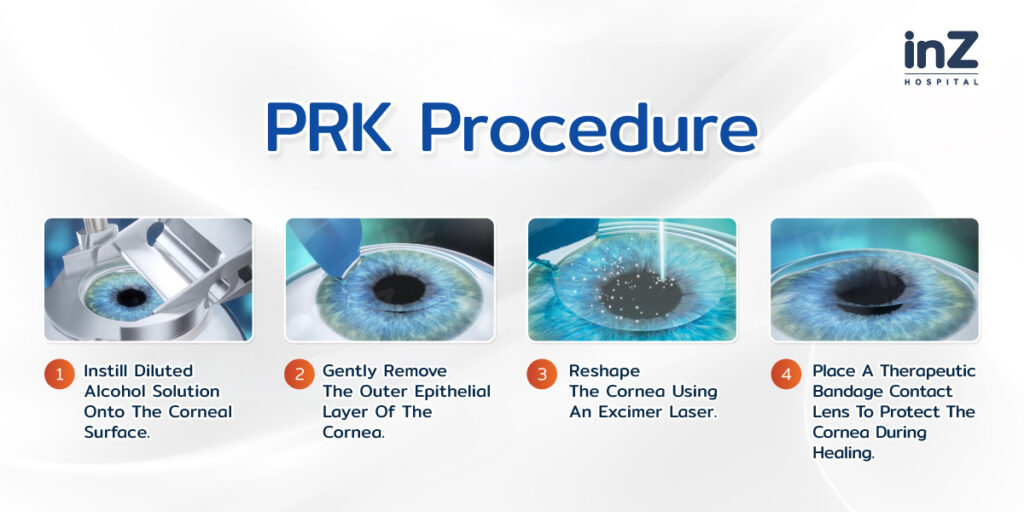
1. PRK (Photorefractive Keratectomy)
PRK corrects myopia, hyperopia, and astigmatism by gently removing the corneal epithelium before reshaping the underlying cornea with an excimer laser. Because no corneal flap is created, the epithelium naturally regenerates during healing.
Suitable for: Patients with thin corneas or those whose occupations or activities carry a higher risk of eye trauma, such as athletes, military personnel, police officers, and pilots.
Advantages
- No corneal flap is created.
- Lower risk of flap-related complications.
- Suitable for patients with thin corneas or dry eye.
- May help preserve more corneal tissue and may reduce postoperative dry eye compared with conventional LASIK.
Limitations
- Longer visual recovery (approximately 1–2 weeks).
- Greater postoperative discomfort during the initial healing period.
- Temporary corneal haze may occur but usually resolves over time.
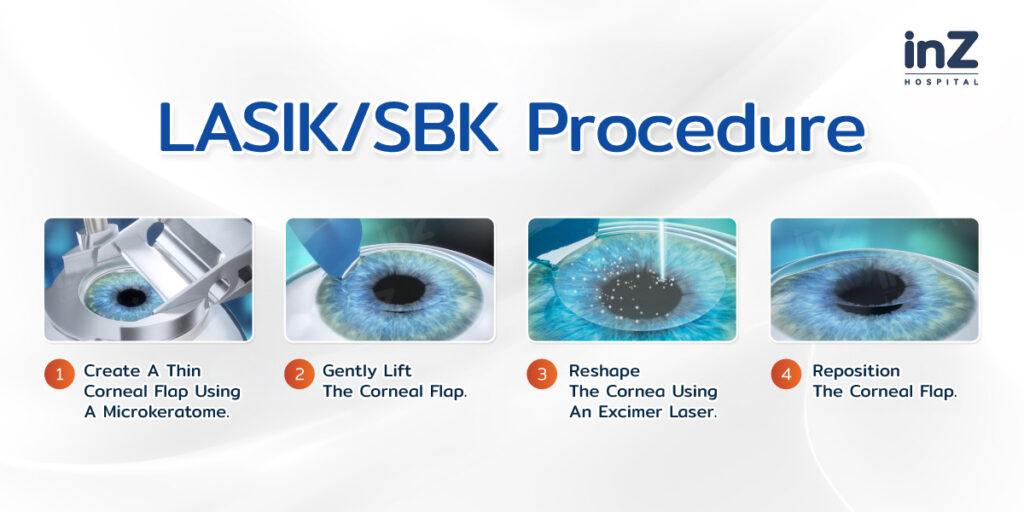
2. SBK (Sub-Bowman’s Keratomileusis)
SBK LASIK is a flap-based LASIK procedure performed using a precision microkeratome blade to create a thinner corneal flap than conventional LASIK. An excimer laser is then used to reshape the cornea before repositioning the flap. The procedure typically takes about 30 minutes, with functional recovery often within one day.
Suitable for: Patients with myopia, hyperopia, or astigmatism seeking rapid visual recovery with minimal discomfort.
Advantages
- Generally more cost-effective than some newer laser vision correction procedures.
- Rapid visual recovery.
- Faster recovery than PRK.
- Creates a thinner corneal flap than conventional LASIK, which may reduce postoperative dry eye.
Limitations
- Corneal flap-related complications remain possible.
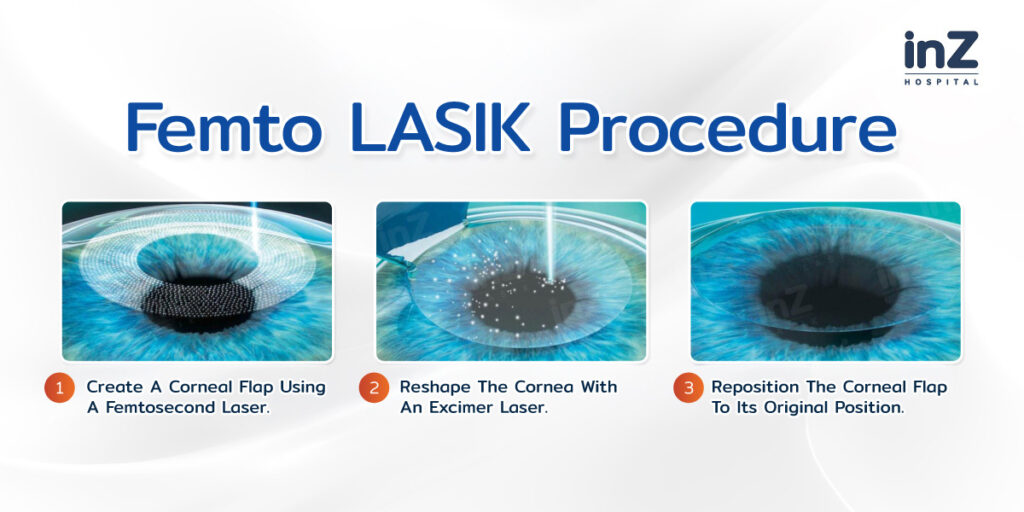
3. Femto LASIK (Femtosecond laser LASIK)
Femto LASIK is a bladeless LASIK procedure. A femtosecond laser is used to create the corneal flap, followed by an excimer laser to reshape the cornea. It can correct myopia, hyperopia, and astigmatism with a high degree of precision.
Suitable for: Patients seeking a highly precise procedure with rapid recovery.
Advantages
- Uses a femtosecond laser instead of a mechanical blade for flap creation.
- High precision and predictable outcomes.
- Reduced risk of blade-related complications.
- Fast visual recovery and wound healing.
- Lower likelihood of postoperative dry eye.
Limitations
May not be suitable for patients with:
- Very thin corneas combined with high refractive errors.
- Certain corneal diseases, such as keratoconus or recurrent corneal erosion.
- Significant cataracts or glaucoma that require other ophthalmic treatment.
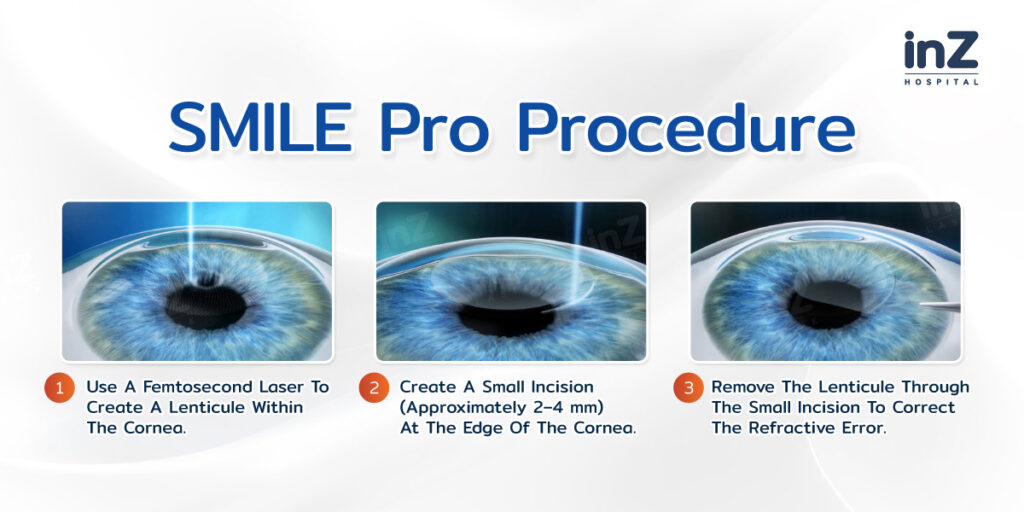
4. SMILE Pro (Small Incision Lenticule Extraction)
SMILE Pro corrects myopia and astigmatism using a femtosecond laser without creating a corneal flap. A small lenticule is created within the cornea and removed through a small incision of approximately 2–4 mm. The laser application itself takes approximately 8 seconds, although the overall procedure takes longer.
Because the procedure preserves more of the corneal structure, SMILE Pro minimizes disruption to corneal nerves, which may result in less postoperative discomfort, a lower risk of dry eye, and better preservation of corneal biomechanical strength in many patients.
Suitable for:
- Patients with dry eye.
- Individuals at increased risk of eye trauma.
- Patients seeking rapid recovery.
Advantages
- No corneal flap; only a small 2–4 mm incision.
- Less disruption of corneal nerves, reducing the risk of postoperative dry eye.
- Better preservation of corneal biomechanical strength compared with flap-based LASIK.
- Minimal discomfort with rapid recovery.
Limitations
May not be suitable for patients with:
- Myopia greater than -10.00 D.
- Astigmatism greater than -5.00 D.
- A combined refractive error exceeding approximately -12.00 D.
- Keratoconus or corneal ectasia.
Preparing for LASIK Surgery
- Discontinue soft contact lenses for at least one week and rigid gas permeable lenses for 1–2 weeks before the preoperative examination and surgery.
- Bring your medical history, including previous eye conditions, systemic diseases, and current medications (such as acne medications).
- Avoid eye makeup on the day of the examination and surgery.
- Arrange transportation, as you should not drive immediately after surgery.
- Bring sunglasses to wear after the procedure.
- Avoid alcohol for 24–48 hours before surgery.
- Do not apply skincare products, creams, perfume, or strongly scented products on the day of surgery.
Postoperative Precautions
- Do not rub your eyes for at least 2 weeks. Wear the protective eye shield during sleep for 1 week.
- Avoid strenuous exercise for 1week, swimming, and saunas for 4 weeks.
- Prevent water from entering your eyes for 1 week.
- Avoid eye makeup for 1 week.
- Wear sunglasses outdoors.
- Use prescribed eye drops exactly as directed.
- Avoid getting water into your eyes while washing your hair during the first few days, as advised by your ophthalmologist.
- Avoid alcohol for 1 week.
Who May Not Be a Candidate for LASIK?
- LASIK may not be recommended for individuals with:
- Corneas that are too thin for safe laser reshaping.
- Certain eye diseases, such as glaucoma, keratoconus, or retinal disorders.
- Severe dry eye disease.
- Unstable refractive error (prescription should be stable for at least one year).
- Age younger than 18 years or refractive error that has not yet stabilized.
- Pregnancy or breastfeeding, as hormonal changes may affect vision and wound healing.
- Autoimmune disorders that may impair healing or increase infection risk.
- Poorly controlled diabetes, which may delay wound healing.
Why Choose inZ Eye Hospital?
- Dedicated Eye Hospital – inZ Eye Hospital is an ophthalmic hospital providing comprehensive laser vision correction services.
- Cornea and Refractive Surgery Ophthalmologists – Cornea and refractive surgery ophthalmologists provide individualized treatment planning based on each patient’s eye condition.
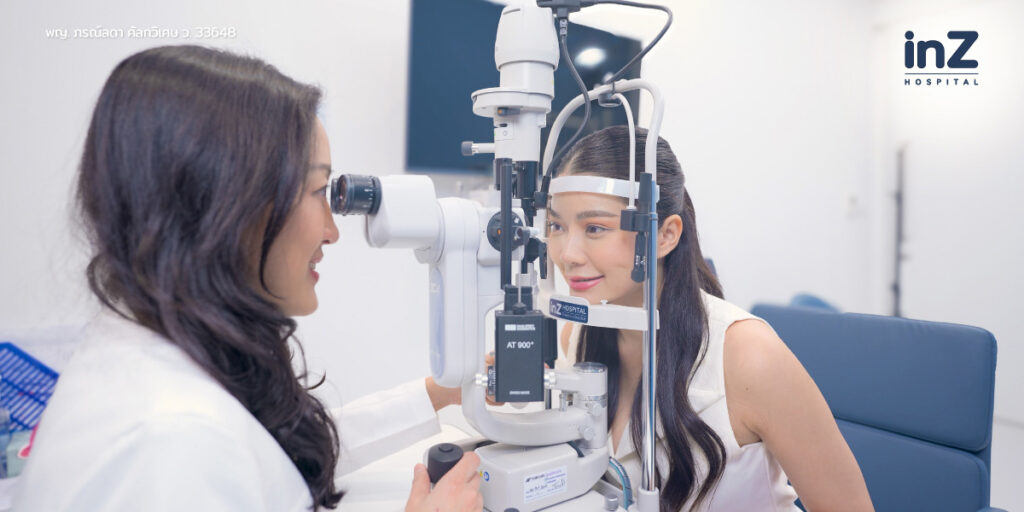
- Advanced Diagnostic Technology – Comprehensive preoperative evaluation using modern diagnostic equipment supports accurate treatment planning.
- Comprehensive Patient Care – From preoperative assessment and consultation through surgery and postoperative follow-up, patients receive continuous care throughout every stage of treatment.
- International Healthcare Standards – Accredited by AACI (American Accreditation Commission International).
LASIK: A Vision Correction Option for Myopia, Hyperopia, and Astigmatism
Choosing to undergo LASIK is an important decision that should be based on a comprehensive eye examination and professional consultation. Since every eye is unique, the most appropriate procedure depends on your refractive error, corneal characteristics, lifestyle, and visual needs. Choosing a medical center with experienced ophthalmologists, comprehensive diagnostic evaluation, and appropriate technology is equally important.
At inZ LASIK Center at inZ Eye Hospital, every patient undergoes a detailed preoperative evaluation to determine the most suitable vision correction procedure. Our team is committed to providing personalized care throughout consultation, treatment, and follow-up to help patients achieve clear, comfortable vision with reduced dependence on glasses or contact lenses.

Contact Us
Facebook : InZ LASIK Center ศูนย์เลสิก โรงพยาบาลอินซ์
Line : @inzlasik → inZ Lasik Center
บทความที่เกี่ยวข้อง
No posts